

Intellectual Humility Reduces Political Hostility: Research Affirms What Scripture Teaches.
Cole Allen — a 31-year-old California teacher — traveled cross-country by train and checked into the Washington Hilton. On Saturday night, he tried to storm a room occupied by the President, the Vice President, the Secretary of State, and roughly 2,500 other people. He had emailed his family minutes before: “My sincerest apologies for all the trouble I’ve caused.”
He signed it “Friendly Federal Assassin.”
No radical network behind him — just a manifesto. It ranked administration officials as targets from highest to lowest. It raged against the President. It invoked Christian Scripture to justify political murder as moral duty. He called it his ‘rules of engagement.
This is what the far end of the spectrum looks like. The near end looks like your neighborhood or workplace.
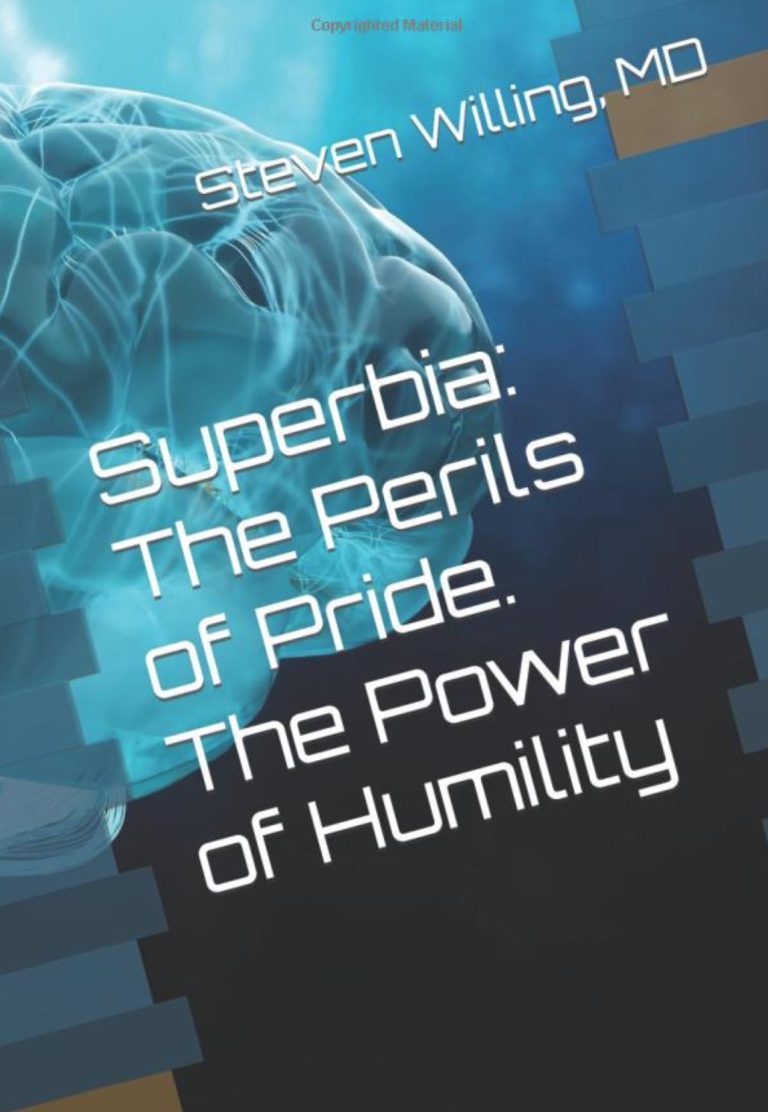
The central theme of Superbia is that pride, or a lack of humility, lies at the root of all conflict and failure. In Chapter 3, I offered Scriptural and scientific evidence that we are given to intellectual pride, which is the absence of intellectual humility.
In our hyperpartisan political environment – which is not particularly unprecedented in human history – our opinions and beliefs on issues drive the conflict. This means that the root of discord is primarily cognitive in nature.
In a 2023 article in Political Psychology, political scientist Glen Smith from the University of North Georgia investigated the connection between political hostility and the lack of intellectual humility. In particular, he differentiated between general intellectual humility, a person’s overall disposition, versus specific intellectual humility [SIH], a person’s disposition toward a particular subject.
Smith opens with what Superbia argues at length, “The human mind is predisposed to intellectual arrogance.” We commit what psychologists call “naïve realism” — the assumption that our own perceptions are objective while everyone else’s are distorted. People who disagree with us must be ignorant, biased, or dishonest. It can’t be that they simply see it differently.
In contrast to pride, intellectual humility allows for the possibility of being insufficiently informed, misinformed, or mistaken in reasoning. It is the foundational principle of sound Christian thinking (Superbia, Chapter 13).
In his survey of 980 subjects, Smith’s findings were consistent with the ‘illusion of understanding‘ — the well-documented tendency to overestimate how well we grasp complex issues:
Instead, the most consistent topic-specific predictor of SIH was perceived expertise on the topic. Respondents who claimed to be well-informed about a topic were consistently and significantly less humble in their opinions about that topic.
Maybe the less humble subjects really were better informed — but other research generally finds the opposite: better-informed people perceive complexity and nuance that makes them less confident in their judgments, not more.
Smith’s research found that those scoring higher in specific intellectual humility were less negatively disposed toward those who disagreed. He identified the lack of humility as “a strong predictor of political hostility,” stronger than the effects of party identification, ideology, or opinion strength.
The most encouraging finding was experimental. Smith divided subjects into two groups, both of which read arguments for and against marijuana legalization. The treatment group also read a statement that modeled humility — expressing genuine uncertainty about the issue’s consequences. That single addition made a measurable difference.
Subjects in the treatment group scored higher in specific intellectual humility. They reported more positive feelings toward people who disagreed with them. They were more likely to describe their opponents as honest, moral, open-minded, and smart. And critically, they hadn’t changed their minds on the underlying issue. Not one bit.
They’d simply been reminded that confidence has limits.
One can be confident without being certain. The difference between the two is the possibility – however remote – of being wrong. That is the space where intellectual humility resides. The typical assumption in political life is that hostility follows from disagreement — that if you want people to get along, you have to get them to agree. Smith’s data suggest the opposite lever is available: you can reduce hostility without resolving the underlying dispute, simply by modeling intellectual humility. The opinions stay. The contempt recedes.
Simple exposure to expressions of humility may be sufficient to spread intellectual humility and, by extension, decrease the prevalence of political hostility.
Perhaps this underlies the wisdom expressed by Proverbs 15:1, “A soft answer turns away wrath, but a harsh word stirs up anger.”
Humility, it turns out, may be contagious — which reaffirms the “moral communities” effect I described in Superbia.
If pride is the greatest of sins, humility is the mother of virtue. Christians are uniquely positioned to lead by example. We cannot expect of others what we lack among ourselves.
Wouldn’t you like to see the political hatred turned down a few degrees? The answer, as always, is humility.




Thank you, dear brother. As always, you have the knack of simplifying complex concepts. And you are very readable! Keep writing and keep scribing.