
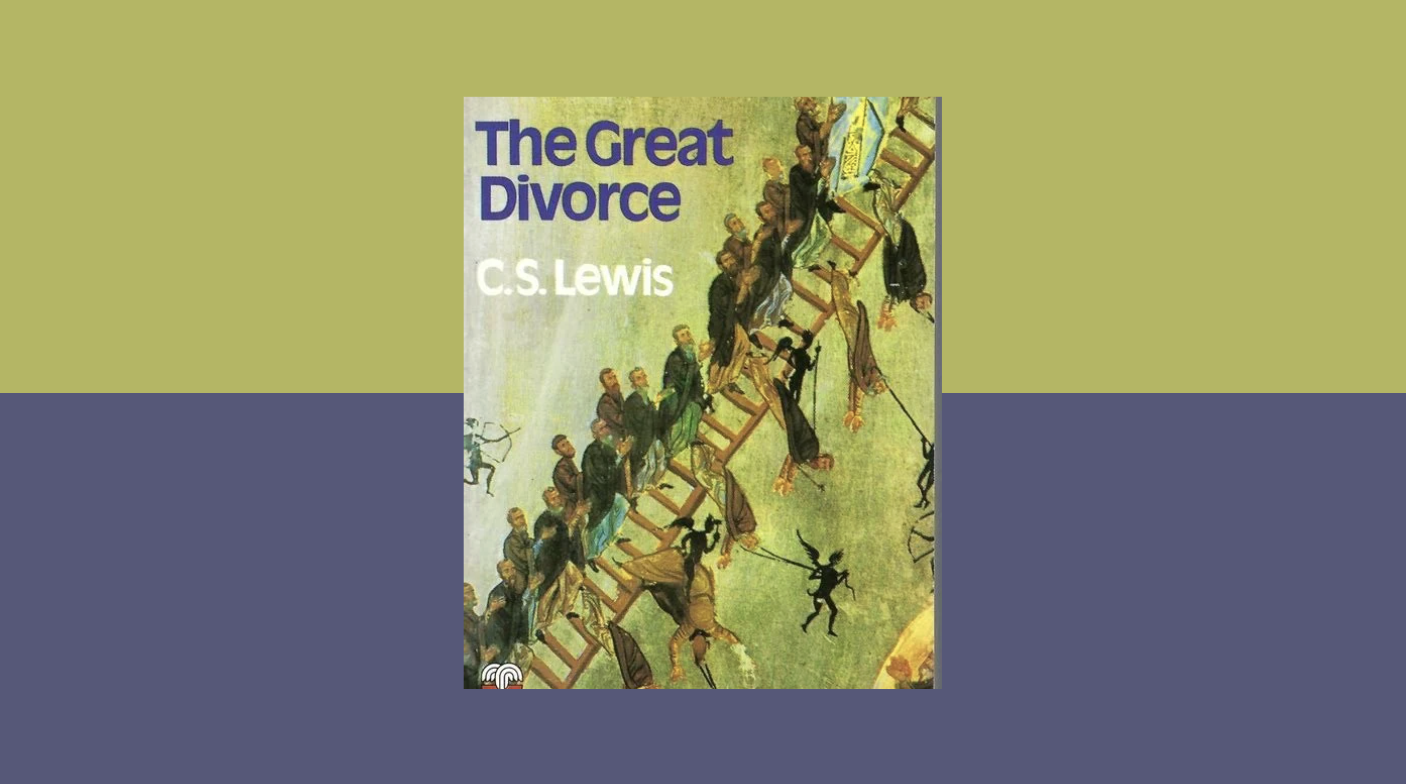
The Sin that Opposes Saving Grace
Themes of Pride in “The Great Divorce”
Published in 1945, The Great Divorce is C.S. Lewis’s imaginative vision of souls from Hell who are offered a bus trip to the outskirts of Heaven — and given the choice to stay. Most refuse.
Every soul in The Great Divorce refuses Heaven for a superficially different reason. Look closer, and it’s always the same reason: pride — the self turned inward, the will that insists on its own way even at the cost of everything else. Lewis didn’t set out to write a book about pride. He wrote a fantasy about souls who refuse Heaven’s invitation. The pattern emerged on its own.
In a new essay at Mere Orthodoxy, I work through Lewis’s gallery of damned souls as a taxonomy of pride in its many disguises — self-righteousness, intellectual hubris, cynicism, narcissism, possessive love, and more. Each portrait is drawn from Lewis’s era. Each one walks among us today.
The Big Man — Convinced of his own decency, he demands Heaven on the basis of personal merit and is offended by grace that treats all as equally undeserving. His pride is self-righteousness, compounded by envy that a convicted murderer already enjoys what he feels owed.
The Bishop — An urbane clergyman who prefers theological speculation to the presence of God, he hides from truth behind endless “honest questions” while remaining quietly certain that orthodox belief is beneath him. His pride is intellectual: the assumption that he alone reasons without bias, and that God should defer to his opinions rather than the reverse.
The Hard-Bitten Ghost — A thoroughgoing cynic who prides himself on never being fooled, he has “seen through” so much that he can no longer see anything at all. His pride is superiority: the posture of the man who mistakes cynicism for wisdom and finds even Heaven too naive to merit his belief.
The Well-Dressed Woman — Consumed by self-consciousness and terrified of embarrassment, she clings to her image and dignity as though they were foundational to her being. Her pride is narcissism: so complete a fixation on self-presentation that it crowds out every other love.
The Grieving Mother — She refuses Heaven because she cannot have her dead son returned on her own terms, insisting that her love entitles her to dictate the conditions of reunion. Her pride masquerades as devotion: what presents itself as maternal love is really possession, and she asserts moral superiority over God himself in its name.
The Tragedian — He weaponizes self-pity, using misery as emotional leverage to hold others hostage to his suffering and veto their joy. His pride is the libido dominandi in its most sanctimonious form: domination not through power but through emotional manipulation, unwilling to bear the sight of anyone else’s happiness.
Ikey — He arrives at the edge of Heaven scheming to carry its golden apples back to Grey Town where they will give him advantage over others. His pride is opportunistic self-promotion: surrounded by infinite abundance, he cannot enjoy it except as a means of surpassing others — measuring worth not by joy received but by superiority conferred.
The Ghost with the Lizard — He carries on his shoulder a whispering lizard representing lust, which he zealously protects because surrender feels like annihilation. His pride is the refusal of transformation: unable to distinguish between the loss of disordered desire and the loss of self, he clings to his damage rather than concede dependence on grace.
Pride is the sin that hides in plain sight, often masquerading as virtue. It blinds us to itself precisely because we are proud. And in every case Lewis depicts, it is pride — not ignorance, not weakness, not circumstance — that slams the door on grace.




My question is, I’m struggling with something with a family member.Do you mind if I talk to you about it?And I’ve also read some studies that bothered me recently.You mind if I email you a question?So to get your thoughts on it and possibly help me with my situation.I know this is a bit off-topic, but I’m really struggling.Would you mind helping me
Hey, could I ask you something?This might be a bit off topic , but could you make a short reply to this video and give your thoughts can you make a response to this person’s claims against the cash review https://m.youtube.com/watch?v=c76HnOSxnuA&pp=ygUYSGFybWZ1bCBvcGluaW9ucyBzdHVkaW9z